

If your dog vomited once and then goes right back to normal, you may wonder whether you need to call the veterinarian or simply keep an eye on them. Sometimes a single episode of vomiting is caused by a minor stomach upset. In other cases, vomiting can be an early sign of an illness or another problem that needs veterinary attention.
How often your dog is vomiting, whether they can keep water down, their energy level, appetite, age, and any other symptoms can help determine how concerned you should be.
Is Your Dog Vomiting or Regurgitating?
Before considering what might be causing the problem, it helps to determine whether your dog is actually vomiting or regurgitating. Although they can look similar, they are not the same.
Vomiting is an active process. Your dog may appear nauseated, drool, lick their lips, retch, or have noticeable abdominal contractions before bringing up food or fluid.
Regurgitation is generally more passive. Food or liquid may come back up suddenly without the retching and abdominal effort associated with vomiting. The material may also appear relatively undigested, particularly if it happens shortly after eating.
This distinction is important because vomiting and regurgitation can have different causes. If you are not sure which is happening, taking a short video of an episode can be helpful for our veterinary team.
Common Causes of Dog Vomiting
Dogs can vomit for many reasons, ranging from a temporary stomach upset to a more serious medical problem.
Some dogs may vomit after a sudden change in diet, eating something that irritates the stomach, getting into the trash, or experiencing motion sickness. Vomiting can also occur with infections, intestinal disease, pancreatitis, toxin exposure, or other medical conditions.
Another concern is a foreign object. Dogs sometimes swallow pieces of toys, socks, bones, food packaging, or other objects that can become lodged in the stomach or intestines and cause an obstruction.
Because there are so many possible causes, vomiting itself is only part of what we consider. The frequency of the vomiting, your dog’s behavior, appetite, ability to drink, and other symptoms can provide important clues.
When You May Be Able to Monitor Your Dog at Home

If your dog vomits once but otherwise seems completely normal, brief monitoring at home may be reasonable. Your dog should remain alert and comfortable, be able to keep water down, and show no other concerning symptoms.
Continue watching for additional vomiting as well as diarrhea, decreased appetite, lethargy, abdominal discomfort, or changes in behavior.
Puppies, senior dogs, and dogs with existing medical conditions may need veterinary attention sooner. If you are uncertain about whether it is appropriate to monitor your dog at home, call Cinema Veterinary Centre for guidance.
When to Worry About Dog Vomiting
Repeated vomiting or vomiting accompanied by other symptoms deserves more attention. Contact a veterinarian promptly if your dog:
- Vomits repeatedly over several hours
- Cannot keep water down
- Has blood in the vomit
- Has vomiting along with significant diarrhea
- Seems weak, lethargic, painful, or unusually quiet
- Has a swollen, tight, or painful abdomen
- Shows signs of dehydration
- Has unexplained weight loss
- May have swallowed a foreign object
- May have eaten a medication, toxic food, plant, chemical, or another potentially poisonous substance
A bloated or enlarged abdomen accompanied by unsuccessful attempts to vomit or repeated retching can be a sign of gastric dilatation-volvulus (GDV), commonly called bloat. This is a life-threatening emergency that requires immediate veterinary care.
If you know or suspect that your dog has eaten something toxic, do not wait for vomiting or other symptoms to develop before seeking veterinary advice. You can also contact Pet Poison Helpline for guidance about possible toxin exposure.
What We Look for During a Veterinary Exam
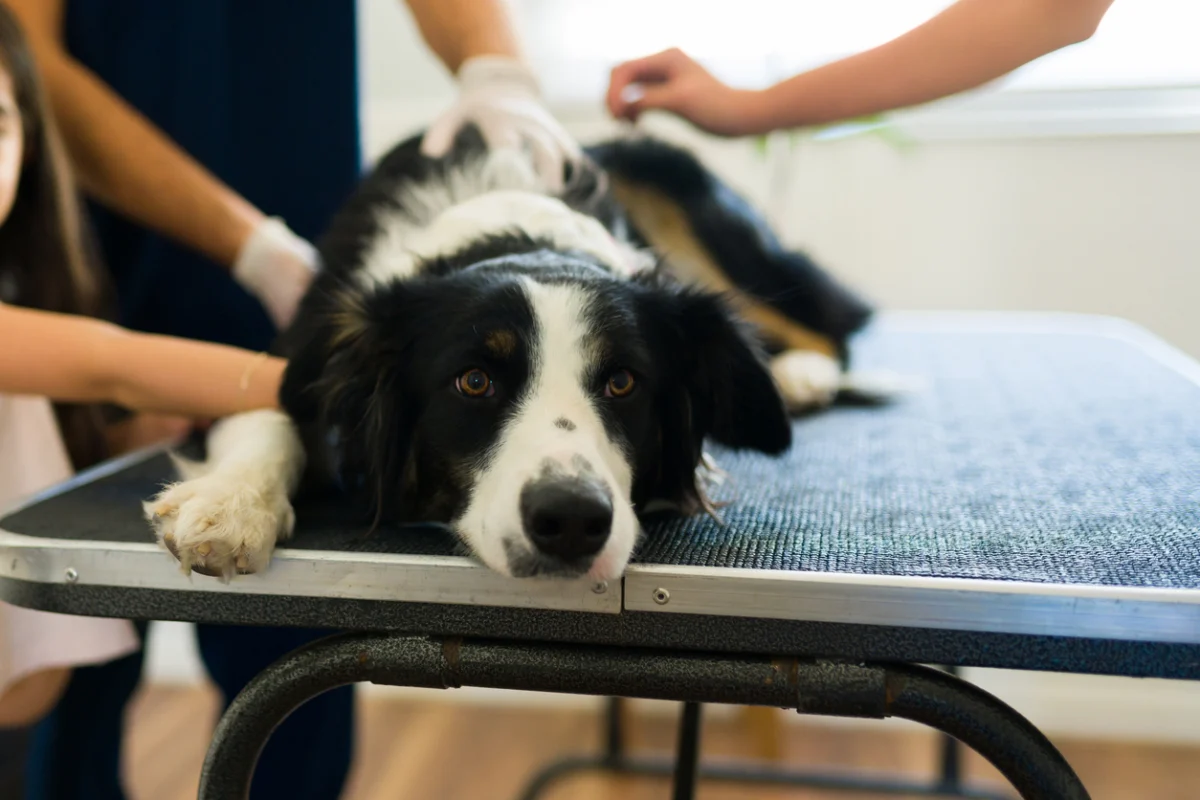
When you bring your dog to Cinema Veterinary Centre for vomiting, we look at more than the vomiting itself. We may ask when it started, how frequently it has occurred, whether your dog is eating and drinking, and whether you have noticed diarrhea, lethargy, pain, or other changes.
A physical examination can also help us look for signs of dehydration, abdominal discomfort, fever, or other abnormalities.
Depending on what we find, we may recommend diagnostic testing. Cinema Veterinary Centre offers in-house and reference laboratory testing that can help us evaluate your dog’s overall health and look for possible causes of vomiting.
In some cases, diagnostic imaging may also be appropriate. Ultrasound for dogs and cats allows us to examine organs and structures inside the abdomen when symptoms suggest that a closer look is needed.
Not every dog that vomits needs extensive testing. We recommend diagnostic tests based on your dog’s symptoms, physical examination, age, medical history, and how the problem has progressed.
When in Doubt, Give Us a Call
One episode of vomiting does not always mean something serious is wrong, but repeated vomiting or vomiting accompanied by other symptoms should not be ignored.
If you are concerned about your dog’s vomiting or are unsure whether an examination is needed, contact Cinema Veterinary Centre. Our team can help you determine whether your dog should be seen and how quickly they may need veterinary care.