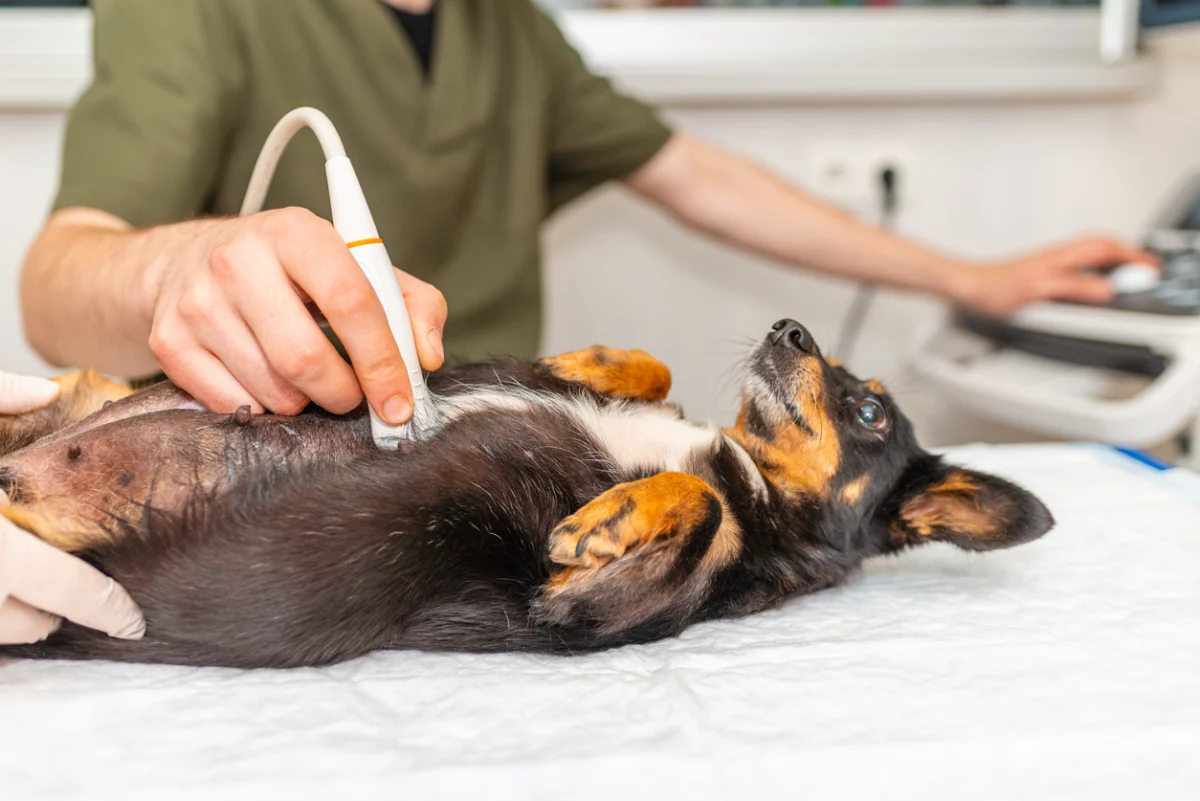
When your dog or cat is not feeling well, the symptoms you notice at home do not always reveal what is causing the problem. Vomiting, weight loss, appetite changes, urinary problems, and other symptoms can have many possible causes. A physical examination and laboratory tests can provide important information, but in some cases, our veterinarians need a closer look at what is happening inside your pet’s body.
Ultrasound for dogs and cats is a non-invasive diagnostic tool that allows us to examine internal organs and soft tissues without surgery. At Cinema Veterinary Centre, we offer in-house ultrasound to help gather additional information about your pet’s health and guide decisions about further testing or treatment.
When Is Ultrasound for Dogs and Cats Recommended?
There is no single symptom that automatically means your dog or cat needs an ultrasound. Our veterinarians consider your pet’s symptoms, medical history, physical examination, and results from other diagnostic tests when determining whether ultrasound could provide useful information.
We may recommend an ultrasound for concerns such as:
- Abnormal blood test results
- Unexplained weight loss
- Persistent vomiting or diarrhea
- Changes in urinary habits
- Ongoing or recurring infections
- Fluid in the abdomen or chest
- A suspected cyst, mass, or other growth
For example, bloodwork may indicate that something is affecting an internal organ, but it cannot show us what that organ looks like. Ultrasound can provide images of internal structures that may help explain abnormal test results or persistent symptoms.
What Can an Ultrasound Show in Dogs and Cats?
Ultrasound uses high-frequency sound waves to create images of structures inside your pet’s body. These sound waves are above the range that people and pets can hear.
Ultrasound is particularly useful for examining soft tissues and organs within the abdomen, including the liver, kidneys, spleen, bladder, stomach, and intestines. Depending on the reason for the examination, it can also help identify fluid accumulation, changes within organs, cysts, masses, and other abnormalities.
What an ultrasound can tell us depends on your pet’s symptoms and the area being examined. The findings can be considered along with your pet’s examination and other diagnostic test results to provide a more complete picture of your pet’s health.
Ultrasound can also be used during pregnancy to confirm that a dog or cat is pregnant and evaluate the developing puppies or kittens.
Ultrasound vs. X-Rays: What Is the Difference?
Ultrasound and X-rays provide different types of information, which is why our veterinarians may recommend one or both when evaluating a health concern.
X-rays are particularly useful for evaluating bones and can also show the size, shape, and position of organs and other structures. They can be valuable when looking for fractures, changes in the chest or abdomen, and other abnormalities that can be identified on a radiograph.
Ultrasound for dogs and cats is especially useful for examining soft tissues and the internal characteristics of organs. It also allows structures to be viewed from different angles during the examination.
Which type of imaging is appropriate depends on what our veterinarians need to evaluate. In some situations, X-rays and ultrasound provide different pieces of information that together can give us a better understanding of what is happening.
What Happens During an Ultrasound for Dogs and Cats?
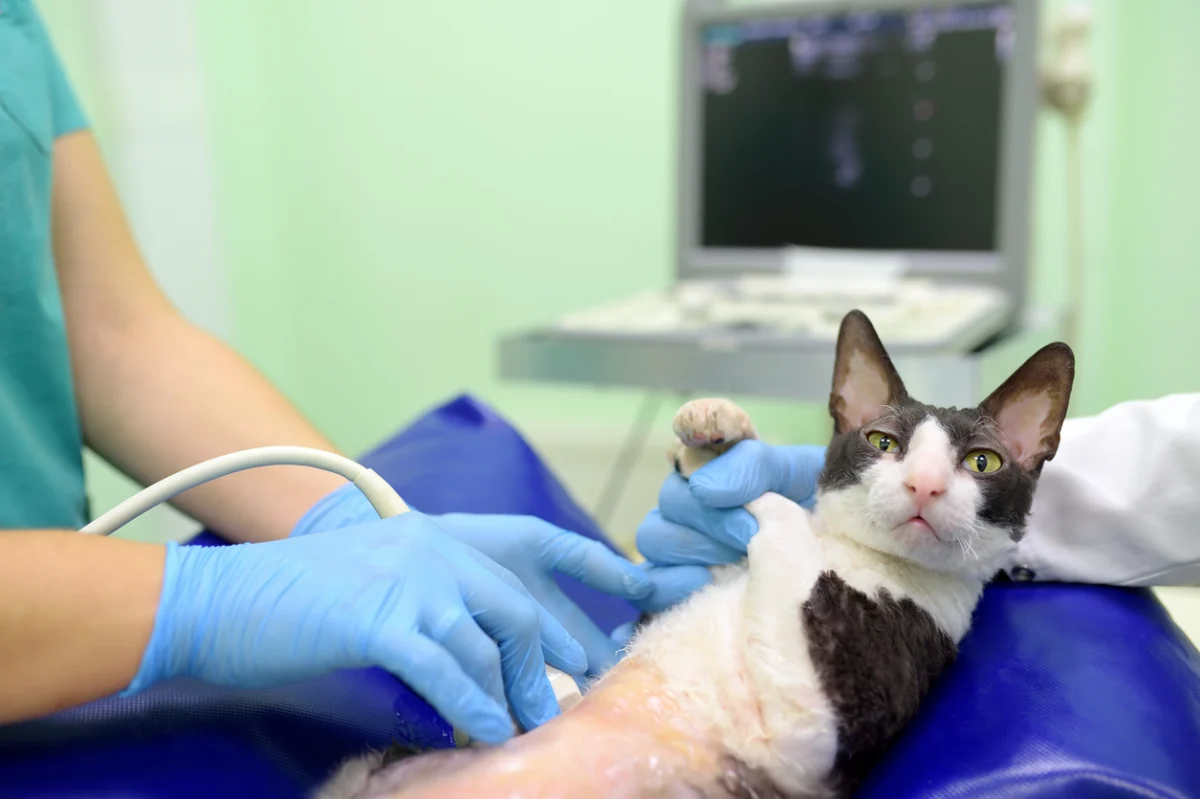 Ultrasound is non-invasive, and many dogs and cats tolerate the procedure well. Whether sedation is needed depends on the individual pet and the type of examination being performed.
Depending on the area that needs to be examined, a portion of your pet’s fur may need to be shaved. The ultrasound probe needs close contact with the skin to produce clear images, and fur can interfere with that contact.
A small amount of ultrasound gel is applied to the skin, and the probe is gently moved over the area being examined. Images appear on a monitor as the examination is performed.
As a Fear Free veterinary practice, Cinema Veterinary Centre takes steps to reduce fear, anxiety, and stress during veterinary visits. We consider your pet’s individual comfort and needs throughout the ultrasound examination and use gentle handling to help make the experience as comfortable as possible.
What Happens After Your Pet’s Ultrasound?
Once the ultrasound results are available, our veterinarians will consider the findings along with your pet’s symptoms, physical examination, and other diagnostic test results. Results may not be available the same day as your pet’s ultrasound.
Depending on what the ultrasound shows, our veterinarians may recommend additional testing or use the findings to help determine the next steps in your pet’s care.
Ultrasound can also be useful for monitoring certain health conditions after a diagnosis has been made. Repeat imaging can show changes over time and provide information that helps guide ongoing care.
Could Ultrasound Help Your Dog or Cat?
Whether your pet needs an ultrasound depends on the health concern and what our veterinarians learn from the physical examination and other diagnostic tests. If ultrasound could provide useful information, we will explain why it is recommended and what you can expect from the procedure.
If you have concerns about your dog or cat’s health, contact Cinema Veterinary Centre to schedule an appointment.
Frequently Asked Questions About Ultrasound for Dogs and Cats
Does my pet need to be sedated for an ultrasound?
Many dogs and cats can have an ultrasound without sedation. Whether sedation is appropriate depends on your pet’s comfort and temperament as well as the type and length of the examination.
Can an ultrasound tell whether a lump is cancer?
Ultrasound can help identify masses, cysts, and other abnormal changes, but an ultrasound image alone cannot always determine whether a growth is cancerous. Additional testing may be recommended to learn more about an abnormality.
Is ultrasound safe for dogs and cats?
Yes. Ultrasound uses sound waves rather than ionizing radiation and is a non-invasive way to examine structures inside your pet’s body.